

High Volume PCB Assembly
Altimex provides high volume PCB assembly services for UK businesses requiring dependable, repeat production at scale. We support surface mount, through-hole and mixed technology assemblies, with production planning shaped around board complexity, component availability, testing requirements and forecast demand. Automated equipment, controlled manufacturing processes and detailed inspection help maintain accuracy, traceability and consistent build quality across every batch. Assemblies are produced in line with recognised industry standards, including IPC-A-610 and IPC-J-STD-001, giving customers reliable support for ongoing and large-scale manufacturing programmes.
✓ Prototype to Volume Production
✓ UK-Based PCB Manufacturing
✓ Quality-Assured PCB Solutions





What Is High Volume PCB Assembly?
The process often relies on automated component placement, controlled soldering, documented inspection and batch testing to maintain consistent quality across large production runs. Surface mount, through-hole and mixed technology assembly can all be used, supported by planned component sourcing, traceability and production scheduling. This helps businesses achieve reliable output, controlled unit costs and dependable supply at scale.
Our Mixed Technology PCB Assembly Capabilities
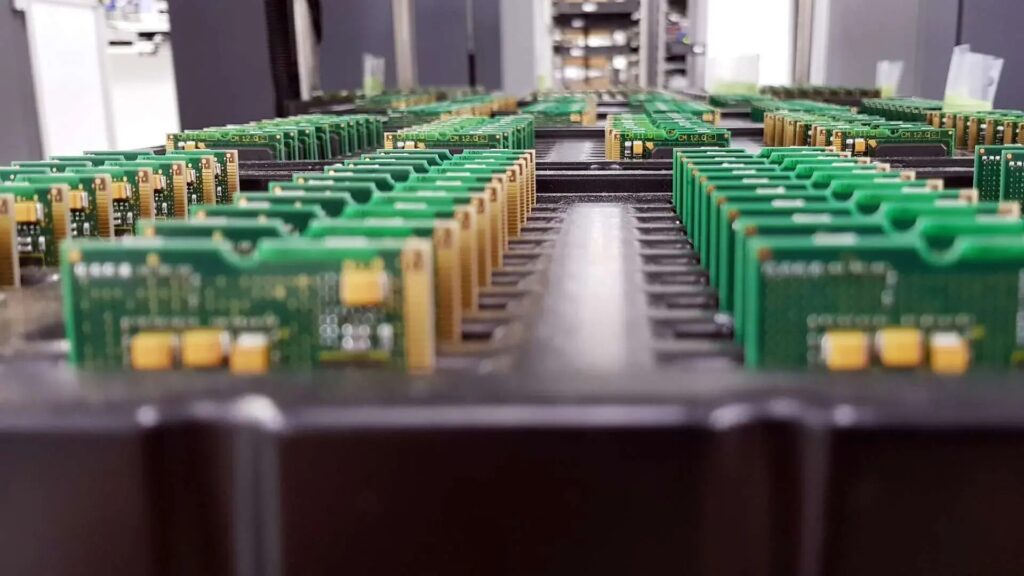
Altimex combines surface mount and through-hole assembly processes to manufacture PCB assemblies containing a wide range of component types. Each stage is planned around the board layout, component requirements and expected production volume, supporting accurate assembly from prototypes through to repeat production.
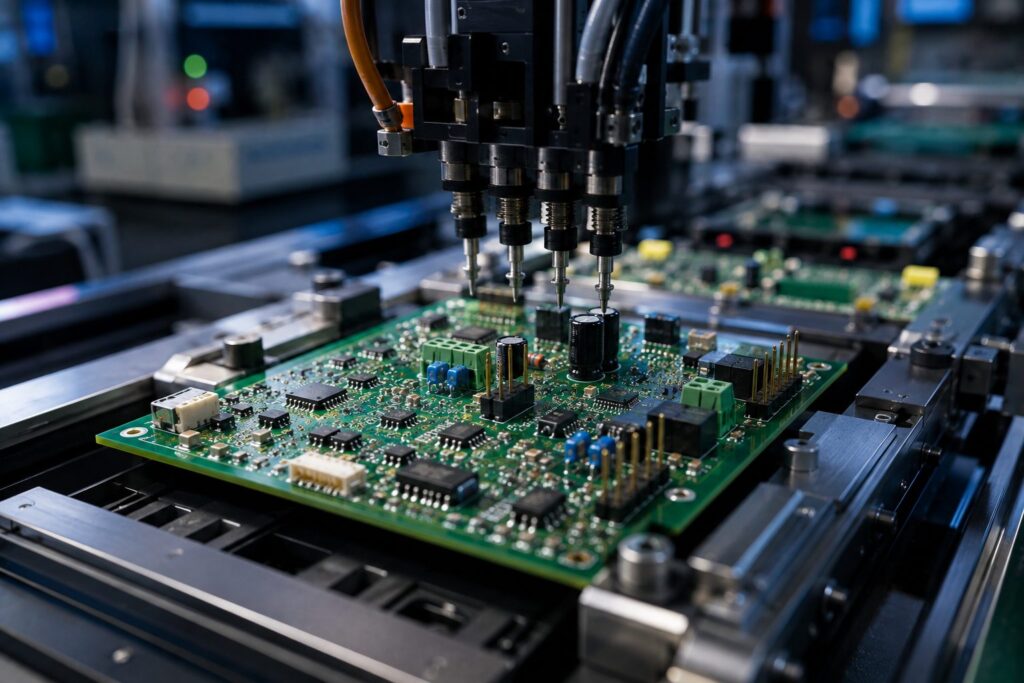
Altimex uses automated surface mount assembly equipment for the accurate placement of compact and fine-pitch components. Controlled solder paste application, component placement and reflow soldering support consistent results across prototypes, low-volume batches and repeat production.
Through-hole components are inserted and soldered using controlled manual or automated processes. This method is suited to connectors, transformers, larger components and parts that require strong mechanical connections or additional support.
Surface mount and through-hole components are assembled on the same PCB using a planned production sequence. Our engineers review component placement, soldering requirements and thermal considerations to reduce manufacturing risks and maintain consistent assembly quality.
Mixed technology PCB assemblies are inspected throughout production using visual checks, automated inspection and testing options based on the project requirements. Work is completed in line with IPC-A-610 and IPC-J-STD-001 standards.
Component Sourcing for High Volume PCB Assembly
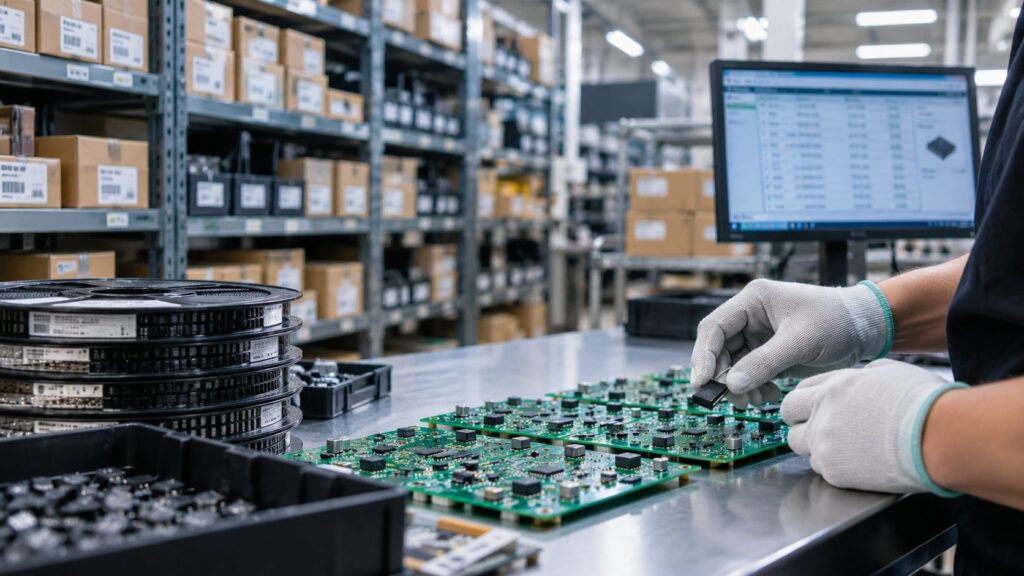
We support surface mount, through-hole and mixed technology assemblies, with component sourcing, batch traceability, inspection and testing available as part of the service. Contact Altimex to discuss your expected volumes, technical specification, production schedule and long-term manufacturing requirements.
Why Work With Altimex?

30+ Years Of Experience

Fast Turnaround Time

Tailored
Solutions

Building Long-Term Partnerships

Certified & Experienced Team
Our High Volume PCB Assembly Process
Altimex follows a controlled high volume PCB assembly process to maintain accuracy, traceability and consistent build quality across large and repeat production runs. Each project is reviewed by experienced engineers, with production planned around the PCB design, forecast demand, component availability, manufacturing capacity and testing requirements.
- Design and manufacturing review
- Production planning and line setup
- Component sourcing and verification
- Solder paste application
- Automated pick and place assembly
- Reflow soldering
- Through-hole component insertion and soldering
- Inspection, testing and batch traceability
Sectors we support.
Electronics manufacturing for applications where quality, reliability and consistent performance matter.




What Is High Volume PCB Assembly Used For?
High volume PCB assembly is used for established electronic products that require large, repeatable production runs. It suits applications with stable PCB designs, forecast demand and defined quality requirements, where consistent output, traceability and efficient production are priorities.
Typical uses include industrial control systems, communications equipment, LED lighting, medical electronics, automotive systems, aerospace technology and defence equipment. Through automated assembly, controlled process settings, batch inspection and testing, Altimex helps customers maintain consistent quality and dependable supply across ongoing manufacturing programmes.
Frequently Asked Questions
What is considered high volume PCB assembly?
High volume PCB assembly refers to the manufacture of printed circuit board assemblies in large, repeatable quantities. The exact volume depends on the board design, component count, production schedule and level of automation required.
What are the benefits of high volume PCB assembly?
High volume production can improve manufacturing efficiency, support consistent output and reduce the cost per assembled board. It is best suited to established products with stable designs and ongoing demand.
Which PCB assembly methods can be used for low volume production?
High volume PCB production can use surface mount technology, through-hole assembly or mixed technology assembly. The chosen method depends on the board layout, component types, mechanical requirements and product application.
Can Altimex manage component sourcing for large production runs?
Yes. Altimex can provide full turnkey sourcing, partial sourcing or work with customer-supplied components. The team reviews the bill of materials, supplier lead times, component lifecycle and potential shortage risks before production.
How is quality maintained across large PCB production runs?
Quality is supported through controlled process settings, automated placement, documented inspection and agreed testing procedures. Batch records and component traceability help maintain consistent standards across repeat production.
What information is needed for a high volume PCB assembly quote?
Customers will usually need to provide Gerber files, a bill of materials, component placement data, assembly drawings, expected order quantities and testing requirements. Forecast demand and preferred delivery schedules can help with production planning.
Can a low volume PCB build move into high volume production?
Yes. A prototype or low volume build can move into higher production quantities once the PCB design, component list and manufacturing data have been approved. A production review may be needed to confirm sourcing, testing and line setup requirements.
How long does high volume PCB assembly take?
Lead times depend on order quantity, PCB complexity, component availability, production capacity and testing requirements. Altimex reviews the project specification and supply requirements before confirming a manufacturing schedule.
How can high volume PCB assembly reduce unit costs?
Larger production runs can spread setup, programming and tooling costs across more boards. Automated placement, planned component purchasing and efficient production scheduling can further reduce the cost per assembly, subject to board complexity, testing requirements and component availability.