PCB Testing & Inspection Services

Altimex provides PCB testing and inspection services for UK businesses that need to confirm the quality, performance and reliability of their electronic assemblies. We support surface mount, through-hole and mixed technology boards across prototype, low-volume and repeat production projects. Our experienced engineers use controlled inspection procedures, automated equipment and detailed quality checks to identify assembly faults, soldering issues and component concerns. All work follows recognised industry standards, including IPC-A-610 and IPC-J-STD-001.

✓ PCB Manufacturing Specialists
✓ Prototype to Volume Production
✓ UK-Based PCB Manufacturing
✓ Quality-Assured PCB Solutions
Proud to have worked with

What Are PCB Testing and Inspection Services?

PCB testing and inspection services are used to check the quality, performance and reliability of printed circuit board assemblies. They help identify issues such as poor solder joints, incorrect component placement, damaged parts and electrical faults before products move into use or larger production volumes.

Altimex has more than 30 years of experience in PCB assembly and electronic manufacturing. From its Cheshire facility, the team inspects and tests surface mount, through-hole and mixed technology boards for sectors including aerospace, automotive, telecommunications, defence and maritime.

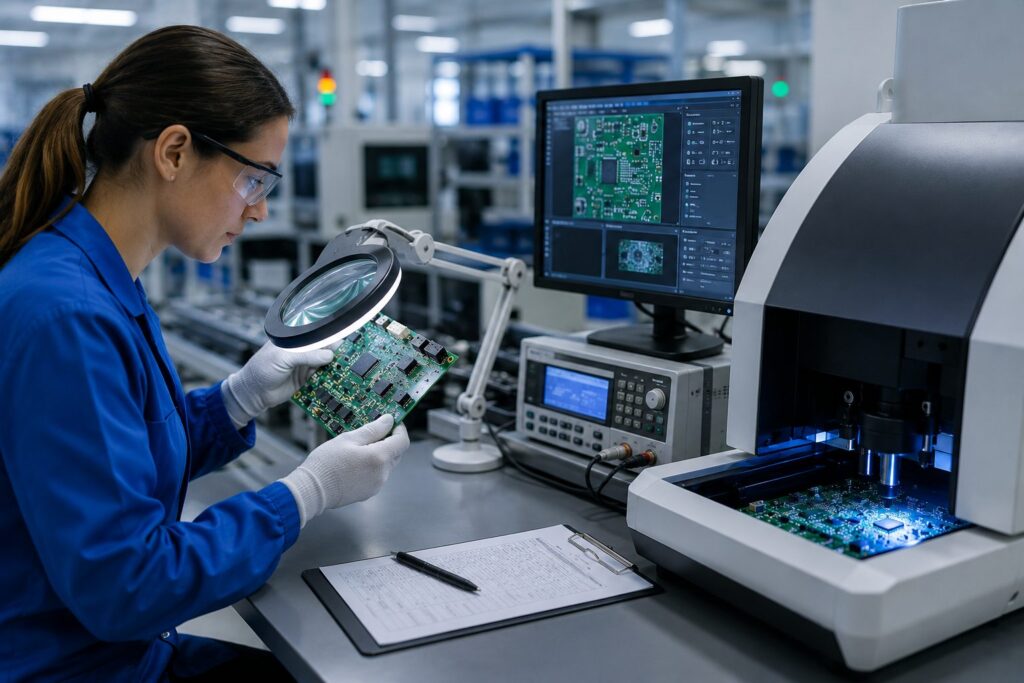
Technician carrying out PCB testing and inspection using specialist electronic equipment

Our Mixed Technology PCB Assembly Capabilities

Altimex combines surface mount and through-hole assembly processes to manufacture PCB assemblies containing a wide range of component types. Each stage is planned around the board layout, component requirements and expected production volume, supporting accurate assembly from prototypes through to repeat production.

Surface Mount Assembly

Altimex uses automated surface mount assembly equipment for the accurate placement of compact and fine-pitch components. Controlled solder paste application, component placement and reflow soldering support consistent results across prototypes, low-volume batches and repeat production.

Plated Through-Hole Assembly

Through-hole components are inserted and soldered using controlled manual or automated processes. This method is suited to connectors, transformers, larger components and parts that require strong mechanical connections or additional support.

Combined Assembly Processes

Surface mount and through-hole components are assembled on the same PCB using a planned production sequence. Our engineers review component placement, soldering requirements and thermal considerations to reduce manufacturing risks and maintain consistent assembly quality.

Inspection and Quality Control

Mixed technology PCB assemblies are inspected throughout production using visual checks, automated inspection and testing options based on the project requirements. Work is completed in line with IPC-A-610 and IPC-J-STD-001 standards.

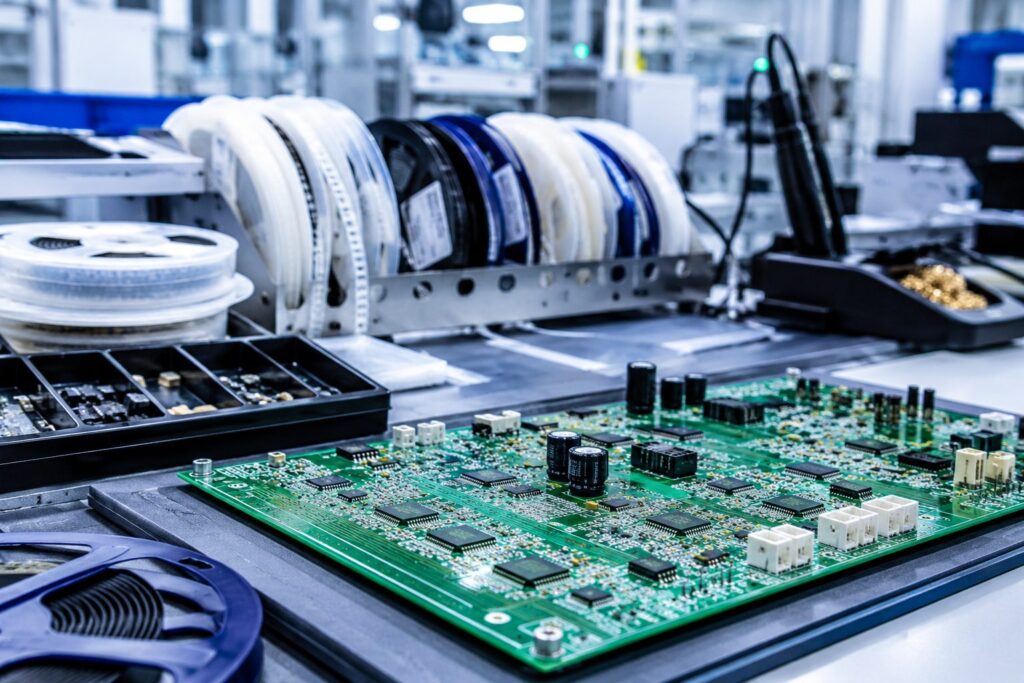
Automated machine placing components onto a printed circuit board during PCB assembly.

PCB Testing and Inspection for Electronic Assemblies

Altimex provides PCB testing and inspection for surface mount, through-hole and mixed technology assemblies. Each board is checked against the agreed design files, build specification and quality requirements to identify defects before delivery.

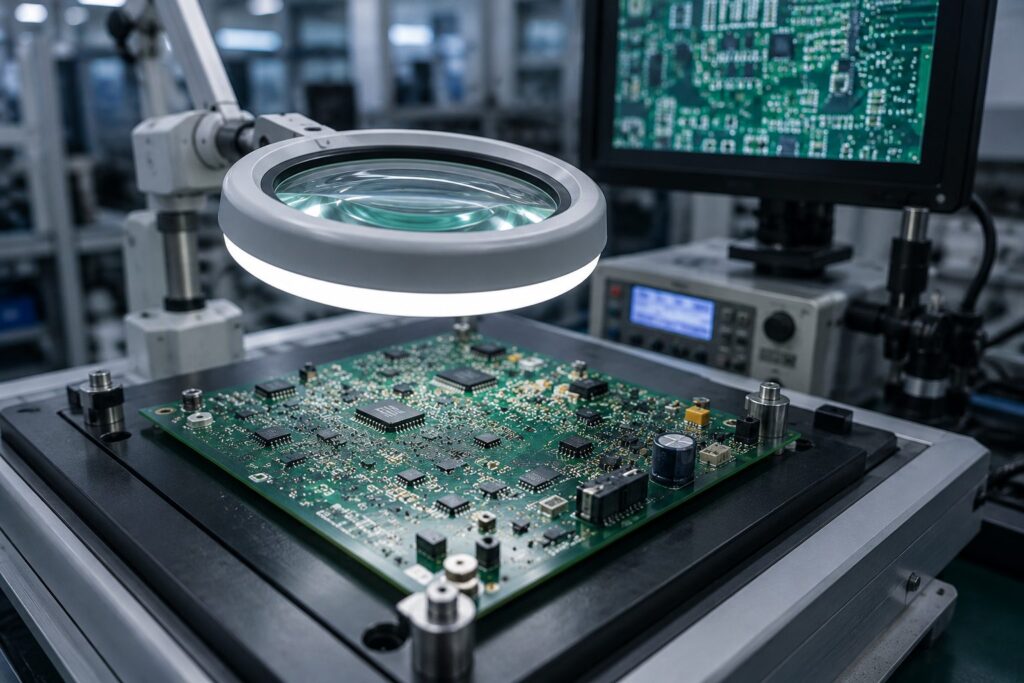
Our team can carry out visual inspection, automated optical inspection and functional testing using agreed procedures. Results are recorded to support traceability, fault reporting and consistent quality across prototype and production builds.

Need PCB Testing and Inspection Services?

Altimex provides PCB testing and inspection services for surface mount, through-hole and mixed technology assemblies. Our team checks each board against the agreed design, build specification and testing requirements to identify faults before delivery.

Contact Altimex to discuss your PCB assemblies, inspection needs and testing requirements.

Why Work With Altimex?

“Altimex go above and beyond to satisfy my demand for more solutions. I’ve the utmost confidence that whatever I request is always met with a high level of professionalism and a surety that a solution that meets my expectations will be provided.”
Airband

Our PCB Testing and Inspection Process

Altimex follows a controlled PCB testing and inspection process to identify faults, confirm workmanship and maintain traceability. Each project is reviewed by experienced engineers, with checks planned around the board design, assembly type and agreed testing requirements.

  • Design files and testing requirements review
  • Visual PCB inspection
  • Component placement and polarity checks
  • Solder joint inspection
  • Automated optical inspection
  • Electrical and functional testing
  • Fault identification and reporting
  • Quality records and traceability
  • Final inspection and approval
PCB Testing & Inspection Services

Sectors we support.

Electronics manufacturing for applications where quality, reliability and consistent performance matter.

What Are PCB Testing and Inspection Services Used For?

PCB testing and inspection services are used to confirm that printed circuit board assemblies meet the required quality, performance and safety standards. They help identify soldering defects, incorrect component placement, electrical faults and workmanship issues before delivery or full production.

Common uses include prototype validation, pre-production checks, fault diagnosis, quality control and final product testing. Altimex supports industrial, medical, automotive, aerospace, communications and defence projects using controlled inspection, testing and reporting procedures.

Frequently Asked Questions

What is PCB testing and inspection?

PCB testing and inspection involves checking printed circuit board assemblies for faults that may affect quality, reliability or performance. The process can assess component placement, solder joints, polarity, board condition and electrical operation against the agreed design and build requirements.

Altimex can inspect surface mount, through-hole and mixed technology PCB assemblies. Testing and inspection can be provided for prototypes, low-volume orders, repeat production runs and more complex assemblies used in demanding electronic applications.

Inspection methods can include detailed visual checks, component placement reviews, polarity checks, solder joint inspection and automated optical inspection. The most suitable approach will depend on the board design, component density, production volume and required acceptance criteria.

Yes. Functional testing can be used to check whether a completed PCB assembly operates as intended under agreed conditions. Tests can assess outputs, inputs, connectivity and selected circuit functions using customer-supplied procedures or an agreed testing plan.

Yes. Customers can provide test instructions, specifications, acceptance criteria and suitable test equipment where required. The Altimex team reviews these requirements before work begins so the correct checks can be completed and recorded.

PCB inspection can identify missing or incorrect components, polarity errors, poor solder joints, solder bridges, damaged parts, contamination and visible board damage. Testing may find electrical faults or performance issues that are not visible during inspection alone.

Yes. Test results, inspection findings and identified faults can be recorded to support quality control and traceability. Clear reporting helps customers review defects, approve repairs and identify any design or manufacturing changes that may be needed.

Yes. PCB testing and inspection can support early prototypes, engineering samples, pre-production trials, low-volume orders and repeat manufacturing. Carrying out checks at each stage can help identify faults early and reduce the risk of issues reaching final production.

PCB testing and inspection services are used across industrial, medical, automotive, aerospace, communications, defence and maritime electronics. These sectors often require reliable assemblies, clear production records and controlled quality checks before products are approved for use.