

An end-of-life (EOL) notification does not automatically mean a PCB needs redesigning or production must stop. Several responses may be available, and the right choice depends on the product’s remaining lifecycle, current inventory, future production plans and the availability of suitable replacement components.
Responding too quickly can create unnecessary engineering work or inventory costs. Waiting too long can leave production dependent on increasingly scarce components. The most effective approach begins with understanding what the product still needs to achieve before deciding whether to continue using existing stock, source additional components, qualify a replacement, redesign the PCB or secure a lifetime buy.
This guide explains the practical considerations behind each option, helping you choose a strategy that supports both immediate production and longer-term manufacturing requirements.
Continue Production Using Existing Component Stock
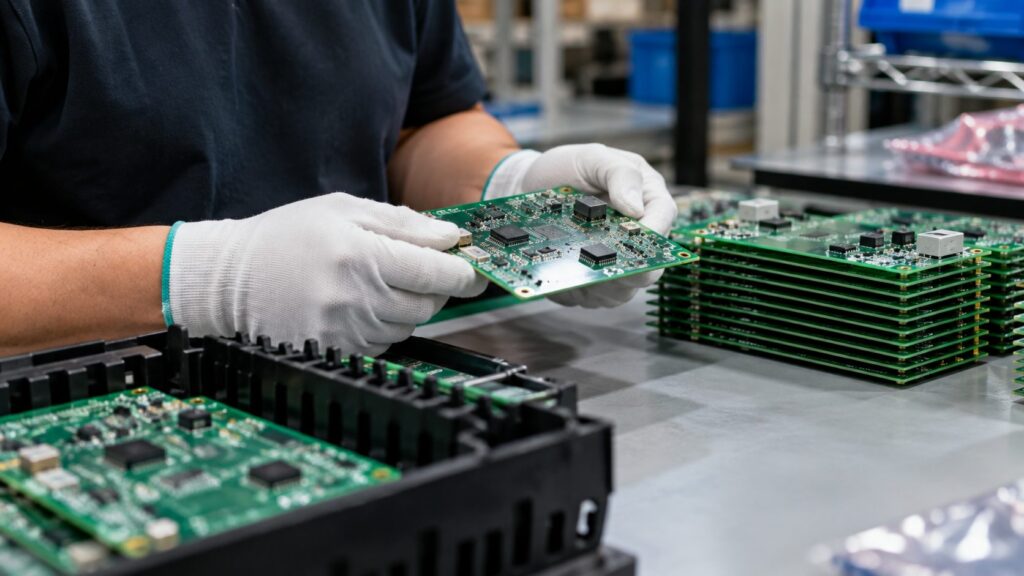
Existing inventory can allow production to continue without immediately changing the PCB, provided the available quantity and condition support the product’s expected requirements. The key question is whether the stock genuinely covers future demand or merely postpones a larger decision.
Receiving an EOL notice does not always require immediate engineering changes. If sufficient traceable components remain in stock, continuing production may be the most practical short-term response while a longer-term strategy is evaluated.
Before relying on existing inventory, assess:
- Current stock levels.
- Forecast production requirements.
- Remaining product lifecycle.
- Confidence in future demand forecasts.
- Component traceability and storage condition.
- Whether additional production runs are expected.
Inventory provides valuable time, although it should not become an excuse to delay planning. Once stock begins to diminish, the number of available options may also reduce, particularly if authorised suppliers no longer hold remaining inventory.
Consider two contrasting situations. A mature product approaching retirement may only require one final production run, making existing stock sufficient to complete manufacture without further investment. A successful product expected to remain in production for several more years presents a different challenge. Existing inventory may keep production moving temporarily, although another solution will eventually become necessary.
Best suited when
- Production requirements are predictable.
- Existing stock comfortably covers remaining demand.
- Product retirement is already planned.
Be cautious when
- Future production volumes remain uncertain.
- Inventory levels are becoming limited.
- Long-term product support is still required.
Using available inventory strategically allows time for informed planning. Simply hoping stock lasts long enough rarely produces the best outcome.
Scale Your Production
From prototype to full-scale electronic assembly, our UK facility is equipped to handle your requirements.
Get a QuoteSource Components From Authorised Alternative Suppliers
If the original component remains available through another authorised supplier, production may continue without immediate design changes. The important consideration is whether verified supply supports future manufacturing requirements rather than solving today’s purchasing challenge alone.
Manufacturers and distributors manage inventory differently. While one supplier may no longer carry a component, another authorised distributor may still have traceable stock available.
Before committing to additional purchases, establish:
- Whether the supplier is authorised by the component manufacturer.
- Provenance and traceability of the components.
- Remaining stock availability.
- Whether supply satisfies forecast production demand.
- Lead times for future orders.
- Procurement implications for ongoing manufacture.
Finding remaining stock should not automatically be viewed as a permanent solution. A supplier may hold enough inventory for the next production run without providing any certainty beyond that point. This is also a reason to review the wider PCB supply chain.
Secondary markets may occasionally become necessary where authorised stock is no longer available. Any purchasing decision should include appropriate due diligence regarding provenance, traceability and quality assurance rather than focusing solely on availability.
What to Check Before Sourcing Remaining Stock:
- Confirm the supplier’s authorisation status.
- Verify traceability documentation where appropriate.
- Compare available quantities against future production forecasts.
- Consider whether this purchase delays or resolves the wider obsolescence issue.
- Assess whether additional sourcing challenges are likely during the product’s remaining lifecycle.
Securing verified stock can provide valuable breathing space. It should also prompt a broader review of how future production will be supported once remaining inventory disappears.
Use Equivalent or Replacement Components
An equivalent component can sometimes preserve an existing PCB design, although similar functionality alone does not guarantee compatibility. Every replacement requires technical assessment against the requirements of the product and the wider manufacturing process.
It is easy to assume that components performing the same function can be exchanged without difficulty. In reality, differences in package size, footprint, pin configuration or electrical characteristics may require engineering changes before production can continue safely.
Assessment may include:
- Electrical characteristics.
- Voltage and current requirements.
- Physical package and footprint.
- Pin configuration.
- Operating environment.
- Communication interfaces.
- Firmware compatibility where relevant.
- Long-term availability.
- Validation and testing requirements.
For example, two integrated circuits may perform the same function while using different packages or pin arrangements. Although electrically comparable, the replacement cannot simply be installed on the existing PCB without further engineering work.
Considering sourcing, engineering and manufacturing together helps prevent introducing new challenges while solving the original obsolescence issue.
What Should You Check Before Approving a Replacement?
Before selecting an alternative component:
- Compare relevant technical specifications.
- Confirm physical compatibility with the existing PCB.
- Identify whether PCB modifications will be required.
- Establish what validation or requalification is necessary.
- Review the replacement component’s own lifecycle and future availability.
The required checks will depend on how the PCB is tested and the product’s requirements.
A technically suitable replacement should support reliable production throughout the remaining life of the product rather than creating another sourcing issue in the near future.
Engineering-Led Solutions
Work with a team that understands modern electronics and end-to-end manufacturing.
Our ExpertiseRedesign the PCB Around Available Components
Redesign becomes more appropriate when remaining supply or replacement components cannot provide a dependable solution for the product’s expected future. Although it requires additional engineering effort and validation, redesign may offer greater long-term stability than repeatedly managing obsolete components.
Not every EOL notice justifies redesigning a PCB. If a product is approaching the end of its commercial life, investing in a revised design may offer limited value. Conversely, products expected to remain in production for several years can justify a more strategic approach.
A redesign should consider:
- Remaining product lifecycle.
- Future production requirements.
- Availability of suitable replacement components.
- PCB layout implications.
- Manufacturing requirements.
- Testing and validation.
- Whether other ageing components should be reviewed at the same time.
Reviewing the wider design can prevent repeated engineering changes as additional components approach obsolescence.
Scenario |
Likely Approach |
| Product nearing retirement with sufficient inventory | Continue using existing stock where appropriate |
| Long product lifecycle with no dependable replacement | Consider PCB redesign |
| Replacement requires significant PCB changes | Evaluate redesign against ongoing engineering effort |
| Multiple components approaching EOL | Review the PCB as a whole rather than addressing each issue individually |
Redesign should be viewed as a product lifecycle decision rather than a reaction to a single purchasing problem. Where component changes affect manufacturability or board layout, integrating redesign with pcb assembly planning creates a more coordinated approach than treating sourcing and manufacturing separately.
When Does PCB Redesign Become Worth Considering?
Several indicators suggest redesign deserves serious evaluation:
- The product has substantial remaining commercial life.
- Suitable replacement components are limited.
- Component sourcing has become an ongoing concern.
- Future production volumes remain significant.
- Multiple ageing components are affecting the design.
- Planned product updates already require engineering changes.
Each project requires balancing engineering effort against future manufacturing resilience. There is no universal threshold, making technical assessment essential before committing resources.
Purchase a Lifetime Buy Before Components Become Obsolete
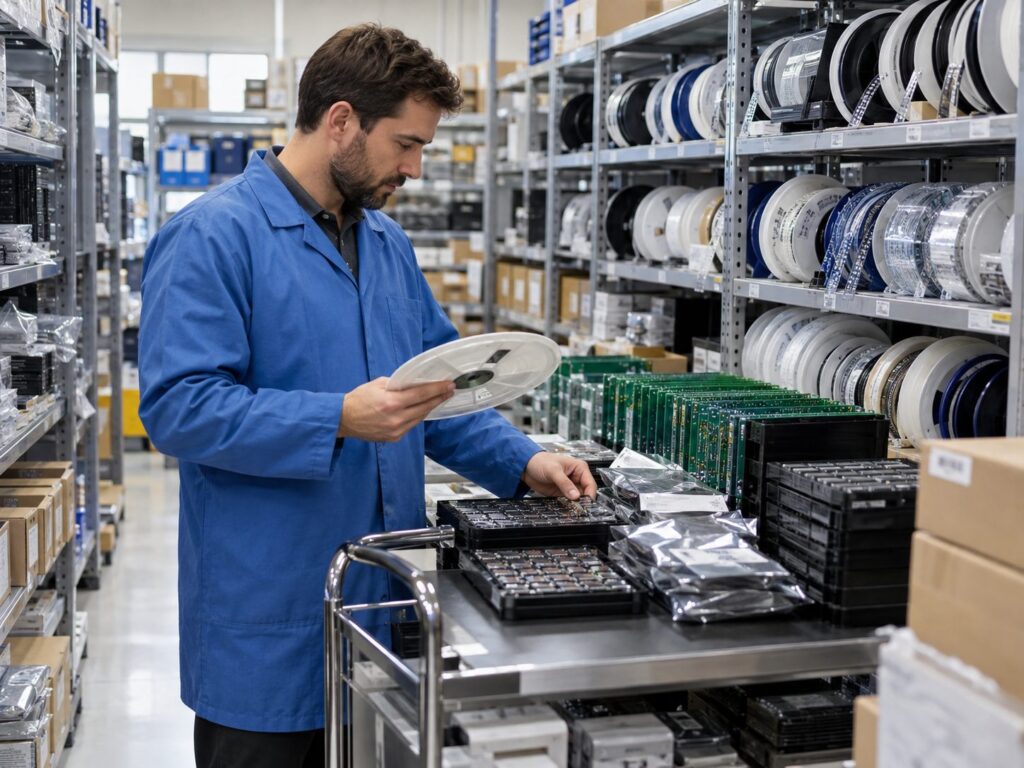
A lifetime buy can secure component availability before normal supply disappears, although its success depends on the accuracy of the production forecast behind it. Purchasing too many components creates unnecessary inventory, while purchasing too few may simply delay another sourcing decision.
Lifetime buys are commonly considered where demand is predictable and the product is expected to remain unchanged throughout its remaining production life.
Before committing, assess:
- Forecast production volumes.
- Confidence in future demand.
- Remaining product lifecycle.
- Inventory investment.
- Appropriate storage conditions.
- The possibility of future design changes.
- The financial impact of excess inventory.
A stable product with well established demand may justify purchasing sufficient stock to complete future production. A product with uncertain sales forecasts presents a greater challenge, since inaccurate forecasting can leave the business holding unused inventory.
A lifetime buy transfers part of the risk from future availability to inventory management. It reduces one uncertainty while introducing another, making realistic forecasting an essential part of the decision.
Readers considering wider production planning may also find what you should know before starting a PCB assembly project useful when assessing how sourcing decisions fit within broader manufacturing requirements.
Ready to start your project?
Contact our technical team today to see how Altimex can streamline your electronics supply chain.
Contact UsWork With a PCB Manufacturing Partner to Manage Obsolescence
A PCB manufacturing partner can help assess component obsolescence alongside sourcing, assembly and any design changes it creates. This becomes increasingly valuable when resolving an EOL issue involves more than locating remaining stock.
Obsolescence decisions rarely affect procurement alone. A replacement component may influence PCB layout, manufacturing processes, testing requirements and future production planning.
Manufacturing input can help evaluate:
- Alternative component suitability.
- Manufacturing implications.
- PCB modifications.
- Assembly considerations.
- Future component sourcing.
- Production continuity.
- Engineering priorities.
Early communication provides greater flexibility than waiting until inventory becomes critically low. More options are generally available while verified stock remains and engineering changes can still be planned rather than rushed.
How to Choose the Best End-of-Life (EOL) Strategy for Your PCB
The right EOL strategy depends on how long the product needs to remain in production, how much verified stock exists, whether a suitable replacement is available and what redesign would involve. Begin with the product’s future requirements rather than choosing whichever option appears easiest today.
The following questions provide a practical framework for decision making:
- How much verified stock is currently available?
- How much future production is realistically expected?
- How long must the product remain supported?
- Can the existing component still be sourced through authorised channels?
- Is a technically suitable replacement available?
- What testing or validation would component changes require?
- Would substitution require PCB modifications?
- What engineering effort would redesign involve?
- Would a lifetime buy create unnecessary inventory exposure?
- Is the product close enough to retirement for existing stock to remain sufficient?
Product Situation |
Potential Strategy |
| Short remaining product life with sufficient stock | Continue production using existing inventory |
| Long product life with a suitable replacement | Assess and qualify an alternative component |
| Long product life with no dependable replacement | Consider PCB redesign |
| Predictable future demand with limited supply | Evaluate a lifetime buy |
No single strategy suits every project. The most appropriate response balances technical compatibility, manufacturing requirements, future production and commercial priorities rather than focusing on component availability alone.
If an end-of-life component is affecting an existing PCB or an upcoming production run, contact us to discuss the available manufacturing options and determine which approach best supports your product’s future requirements.