

Free issue components are electronic parts purchased or owned by a customer and supplied to a manufacturer for use in production. Instead of the manufacturer sourcing every item on the bill of materials (BOM), the customer provides selected parts.
This approach can suit businesses with existing stock, established purchasing agreements or specialist components. However, quantities, identification, condition, shortages, ownership and surplus stock all require consideration. Understanding these responsibilities helps determine whether free issue components are appropriate for your PCB assembly project.
What Are Free Issue Components?
Free issue components are electronic parts purchased or owned by the customer and supplied to a manufacturer for use in a production build, rather than being sourced by the manufacturer as part of the assembly service.
The word “free” does not mean the components have no cost or financial value. It refers to material provided by the customer for use within the contracted manufacturing work.
Terminology can vary between manufacturers. You may see free issue material described as customer-supplied components, consigned components or part of a consigned PCB assembly arrangement.
For example, a business might already hold 2,000 units of a specific connector and provide the required quantity to its PCB assembly partner for an upcoming production run. The quantity is illustrative. In this arrangement, the customer retains a component sourcing role, making accurate identification, quantities and suitability important considerations before the parts enter production.
Scale Your Production
From prototype to full-scale electronic assembly, our UK facility is equipped to handle your requirements.
Get a QuoteHow Do Free Issue Components Work in Electronics Manufacturing?
Under a free issue arrangement, the customer provides agreed components to the manufacturer, which receives and uses them within the contracted manufacturing process.
The exact process varies between manufacturers, although it generally involves:
- Agreeing supplied components. The parties establish which bill of materials (BOM) items the customer will provide and which the manufacturer will source.
- Identifying requirements. Part numbers, quantities and component information must correspond with the manufacturing specification.
- Delivering components. The customer sends the agreed stock to the manufacturer in suitable condition.
- Receiving and checking material. Supplied stock is identified and reviewed for suitability before production.
- Allocating components. Accepted parts are assigned to the relevant manufacturing build.
- Managing remaining stock. Surplus material is handled according to the agreed arrangement.
Customers do not necessarily need to supply every component. For example, they might provide a specialist integrated circuit (IC) while the manufacturer sources routine resistors, capacitors and other BOM items.
This allows businesses to retain procurement control where needed while using manufacturer sourcing for other components, subject to the services and terms available.
Who Owns Free Issue Components During the Manufacturing Process?
Free issue components normally originate as customer owned stock, although ownership, risk and responsibility while materials are held by a manufacturer should be confirmed in the contractual arrangement.
Physical custody and legal ownership are separate issues. Delivering customer-owned material to a manufacturing site does not, by itself, establish who carries every risk associated with the stock.
The relevant terms may need to cover loss, shipping damage, handling, discrepancies and defective material. The appropriate arrangement depends on the contract and circumstances.
Procurement teams should therefore avoid assuming the phrase “free issue” answers questions about liability. Those matters are better established before valuable or difficult to replace components are dispatched.
Engineering-Led Solutions
Work with a team that understands modern electronics and end-to-end manufacturing.
Our ExpertiseWhy Do Businesses Supply Their Own Electronic Components?
Businesses may free issue components because they already hold stock, have negotiated purchasing arrangements or need to retain control over specialist components.
Several commercial situations can make the arrangement worth considering.
- Existing inventory: A company may already own suitable components purchased for previous or planned production.
- Established purchasing agreements: A procurement team may have negotiated group-wide arrangements with an approved distributor or manufacturer.
- Specialist components: Certain parts may require direct purchasing relationships, specific approvals or controlled sourcing.
- Previously committed stock: A business changing manufacturing partners may already hold components purchased for future production.
- Internal procurement control: Some organisations prefer selected parts to remain within established purchasing processes.
For example, a large company may have a central purchasing agreement covering components used across several products. Asking each electronics manufacturing partner to purchase those same parts separately could conflict with the organisation’s procurement model.
Free issue can preserve the existing arrangement while allowing assembly work to move to the selected manufacturer.
This does not make customer sourcing inherently more economical. The commercial case depends on stock already held, purchasing terms, internal resources and the additional responsibility retained by the customer.
Readers who need a broader overview of the parts used in PCB production can also see Altimex’s guide to 10 common PCB components.
What Types of Components Can Be Supplied as Free Issue?
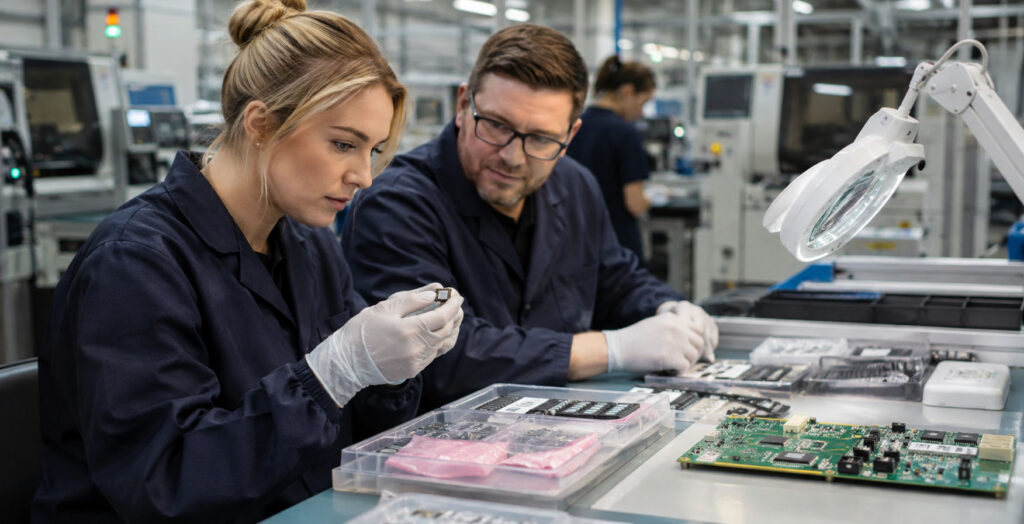
A range of electronic components can potentially be supplied as free issue material, provided they are suitable for the assembly process and meet the manufacturer’s agreed requirements.
Free issue describes a procurement and ownership arrangement rather than a particular component category. Depending on the project, customer-supplied material might include:
- integrated circuits
- connectors
- resistors
- capacitors
- specialist or proprietary parts
- surface mount technology (SMT) components
- through-hole components
Acceptance should never be assumed purely because a component can physically be fitted to a PCB. Its specification, condition, packaging and compatibility with the planned manufacturing process still matter.
Altimex provides PCB assembly covering SMT and through-hole components, alongside component sourcing and consigned assembly options. Customer-supplied components are reviewed for suitability before assembly.
The practical question is therefore not only whether a component can be free issued. It is whether the supplied material is appropriate for the specific manufacturing requirement.
Ready to start your project?
Contact our technical team today to see how Altimex can streamline your electronics supply chain.
Contact UsWhat Are the Benefits of Using Free Issue Components?
Free issuing can be useful when a business already has suitable stock or purchasing arrangements and wants to retain greater control over particular components.
Its value depends on the reason for using it. There is no automatic commercial advantage.
| Situation | When Free Issue May Help |
| Existing component inventory | Stock already owned can be allocated to an upcoming build rather than leaving usable material unused. |
| Established supplier agreements | The customer can retain purchasing through an existing approved route. |
| Specialist parts | Procurement can remain under the control of the organisation with the relevant supplier relationship or technical knowledge. |
| Previously committed stock | Components bought before a change of manufacturing partner may still be usable for future production. |
| Approved sourcing requirements | The customer can retain direct control where particular components must come from an approved source. |
These benefits should be considered alongside the administrative work involved. Customer-controlled procurement also means maintaining visibility over quantities, specifications and availability.
A business with a capable purchasing team and established component supply arrangements may be comfortable retaining these responsibilities. Another organisation may gain more value from asking its electronics manufacturer to manage component sourcing alongside assembly.
The relevant benefit is therefore control where control serves a purpose, not control for its own sake.
What Are the Risks of Supplying Free Issue Components?
Supplying your own components can shift more procurement, inventory and shortage risk back to your business, particularly if quantities, condition or availability do not match production requirements.
A PCB may require many individual BOM items, yet a shortage involving one necessary customer-supplied component can affect the wider build. Holding most of the required stock does not resolve a shortage elsewhere in the assembly.
| Risk | Possible Consequence | Practical Mitigation |
| Insufficient quantity | Production may be delayed or the planned build quantity reduced. | Confirm required quantities before dispatch and clarify whether additional material is needed for the manufacturing process. |
| Incorrect part or revision | Material may not match the approved manufacturing requirement. | Check manufacturer part numbers, descriptions and BOM references before shipment. |
| Poor component condition | Parts may be unsuitable for production. | Review storage history and condition before committing older stock to a build. |
| Inappropriate packaging | Identification or handling may become more difficult. | Agree packaging and receiving requirements with the manufacturer before dispatch. |
| Defective supplied material | Faults may interrupt manufacturing or require investigation. | Establish how defective customer-supplied material will be handled. |
| Replacement stock unavailable | A shortage can become difficult to resolve quickly. | Check availability before relying on limited or hard-to-source inventory. |
One of the biggest mistakes is treating free issues as a logistics task rather than part of production planning.
For example, a customer might deliver almost every component required for a PCB build while remaining short of one specialist part. If no replacement is available and substitutions require approval, the missing item can affect the production schedule.
This is why quantity planning needs to consider manufacturing requirements rather than finished-unit quantities alone. Any allowance for setup, attrition or other production requirements should be confirmed with the manufacturer instead of assumed.
How Should Free Issue Components Be Prepared for a Manufacturer?
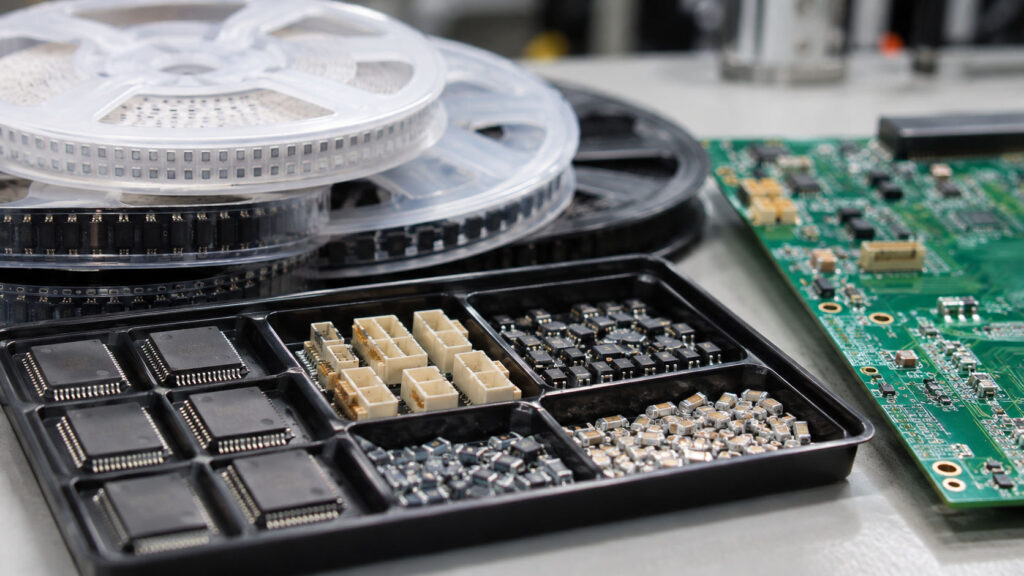
Free issue components should arrive clearly identified, in suitable condition and packaging, with quantities and part information which can be checked against the manufacturing requirement.
Before dispatch, procurement or stores teams should check:
- manufacturer part numbers are clear
- quantities have been counted and recorded
- supplied items correspond with the correct BOM entries
- component descriptions and revisions are unambiguous
- packaging is suitable for the component and agreed handling requirements
- relevant batch or traceability information is available where required
- known storage or handling requirements have been identified
- the manufacturer has been told which parts are customer-supplied
- any expected surplus has been considered
- requirements for additional manufacturing quantities have been discussed
This checklist should not replace the manufacturer’s own receiving instructions. Requirements can differ according to component type, assembly process and contractual arrangement.
Older stock deserves particular attention. A component being unused does not automatically mean it is ready for production. Its identity, condition, storage history and suitability still need consideration.
Sending unidentified loose stock with an assumption the manufacturer will determine where everything belongs creates avoidable uncertainty. Clear information at handover helps both parties identify discrepancies before they affect the build.
Altimex-specific packaging, quantity and intake requirements should be confirmed directly before customer-owned stock is dispatched.
How Are Free Issue Components Stored and Tracked?
Customer-supplied components need to remain identifiable and controlled while held for manufacturing, allowing stock to be allocated correctly and reconciled against production.
Inventory control matters because the material belongs to a particular customer and may be intended for a specific product, batch or future order.
At a general level, effective control requires clear component identification, quantity records and a means of relating stock to the appropriate manufacturing requirement. Where traceability forms part of the project specification, the information supplied with the components also needs appropriate consideration.
Repeat production makes this especially important. Material left after one build may potentially be relevant to another, provided it remains suitable and corresponds with the required revision.
Customers should ask their manufacturing partner how free issue inventory is identified, recorded and reconciled. Altimex’s specific stock-control process should not be assumed without confirmation.
Who Is Responsible for Damaged, Missing or Defective Components?
Responsibility depends on what caused the loss or defect and on the terms agreed between the customer and manufacturer, which makes clarification important before customer-owned stock is supplied.
Different scenarios raise different questions.
| Scenario | Question to Clarify |
| Components arrive damaged | Was the damage present before dispatch or caused during transport? |
| Delivered quantity differs from the paperwork | How and when will the discrepancy be reported? |
| Parts prove defective during manufacturing | How will the defect be assessed and replacement stock arranged? |
| Material is damaged while being handled | What contractual terms apply to customer-owned stock in the manufacturer’s custody? |
| Stock cannot be located | What inventory records exist and how will the discrepancy be investigated? |
These questions cannot be answered reliably by applying a universal free issue rule.
A pre-existing component defect presents a different situation from material damaged after receipt. Shipping damage introduces another party and potentially different contractual considerations. Quantity discrepancies may also originate before components reach the manufacturing facility.
The safest commercial approach is to agree responsibilities before production rather than waiting for a shortage or defect to expose different assumptions.
For high-value, scarce or proprietary components, this discussion becomes particularly important. Replacement lead times and availability can make the operational effect of a loss greater than the component’s purchase price alone.
What Happens to Surplus Components After Production?
Surplus free issue stock may remain after a production run, which means the customer and manufacturer should agree whether it will be retained for future builds, reconciled or returned.
Unused material can arise where supplied quantities exceed production consumption or additional stock was provided to support the manufacturing requirement.
Before sending components, useful questions include:
- Will unused stock remain with the manufacturer?
- Can it be allocated to a future repeat build?
- How will the remaining quantity be recorded?
- Can surplus material be returned if requested?
- What happens when a product or component revision changes?
- How long can customer-owned stock remain in storage?
The answers depend on the manufacturer’s procedures and contractual terms. Altimex’s policy on storage, reconciliation and returns requires confirmation rather than assumption.
Planning this stage early can prevent obsolete or forgotten stock accumulating after production has finished.
Are Free Issue Components Right for Your Electronics Project?
Free issue components can make sense when you have a clear reason to control component purchasing or use existing stock, while manufacturer-managed sourcing may be more suitable when you want procurement handled alongside assembly.
Neither model is inherently preferable. The decision depends on the project, available purchasing resources and the reason for retaining control.
| Free Issue May Suit You If | Manufacturer Sourcing May Suit You If |
| You already own suitable component stock. | You want procurement managed alongside assembly. |
| You have established supplier agreements. | You have limited internal component-purchasing capacity. |
| You need direct control of specialist parts. | You want the manufacturer to manage more of the BOM. |
| Particular components must come through an approved source. | You prefer fewer component-sourcing responsibilities internally. |
| You have existing inventory committed to the product. | You do not hold suitable stock or established supply agreements. |
A third consideration is whether responsibility needs to be identical across the entire BOM. Some projects may justify customer control of particular components while other items are sourced through the manufacturing partner, subject to the services and terms available.
Before deciding, establish who will select suppliers, place orders, monitor availability, verify quantities, resolve shortages and manage remaining inventory. Those responsibilities matter more than the label applied to the sourcing model.
If you already hold components for a PCB build, or need support sourcing the BOM, contact us to discuss your assembly requirements and the most suitable component supply approach.