

Making the PCB surface finish selection influences far more than the appearance of a finished board.
The chosen finish affects solderability, assembly consistency, manufacturing tolerances, storage stability and long-term product performance.
Electroless Nickel Immersion Gold (ENIG) and Hot Air Solder Levelling (HASL) remain two of the most widely specified surface finishes across electronics manufacturing.
Each offers distinct advantages, alongside limitations that become more significant depending on component density, reliability requirements and production objectives.
Choosing between the two is rarely a matter of identifying a universally superior option. A finish that performs exceptionally well in a complex multilayer industrial assembly may introduce unnecessary cost into a straightforward commercial product. Equally, a finish selected purely on budget can create assembly challenges where tighter tolerances are required.
Understanding how ENIG and HASL behave throughout manufacturing enables engineers, designers and procurement teams to make informed decisions aligned with application requirements rather than assumptions.
Surface Flatness
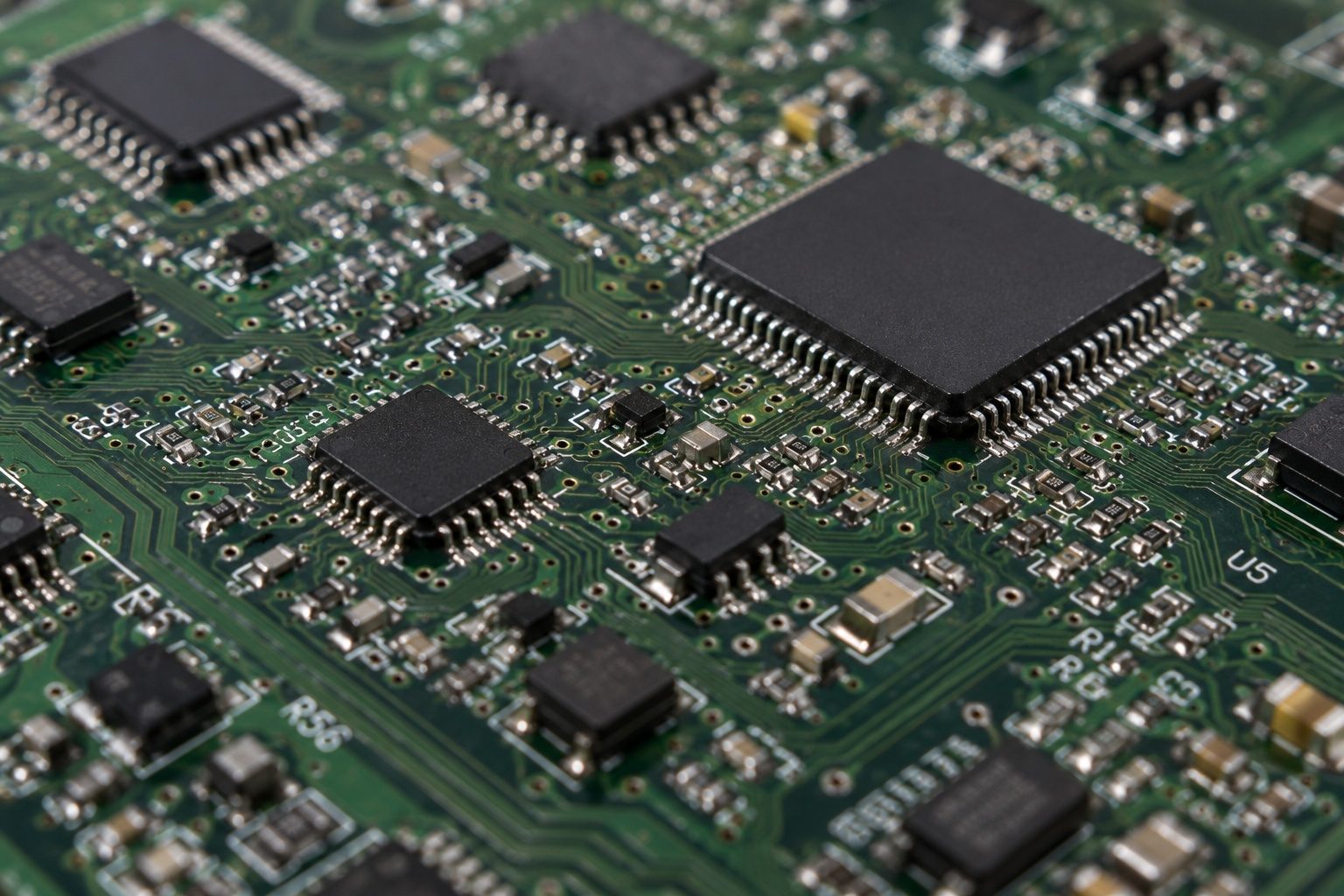
ENIG provides a significantly flatter surface finish than HASL, making it more suitable for fine-pitch and densely populated PCB designs.
The difference stems from the manufacturing process. ENIG uses a controlled chemical deposition method to apply layers of nickel and gold across exposed copper surfaces. The resulting finish is highly uniform and consistent.
HASL applies molten solder to exposed copper before excess material is removed using hot air. Although highly effective, this process can leave slight variations in solder thickness across the board surface.
Surface flatness becomes increasingly important as component density increases. Modern assemblies containing BGAs, QFNs, microcontrollers and compact SMT devices require consistent placement surfaces to maintain assembly accuracy.
Practical benefits of a flatter surface include:
- Improved solder paste deposition consistency
- Better component placement accuracy
- Reduced risk of solder bridging
- More predictable reflow performance
- Enhanced assembly repeatability
For a high-density PCB carrying fine-pitch BGA devices, even minor surface irregularities can affect solder joint formation. In these scenarios, ENIG’s uniform surface supports tighter manufacturing tolerances and improved assembly consistency.
HASL remains entirely suitable for many standard assemblies where component spacing is less demanding and ultra-flat surfaces provide limited additional value.
Scale Your Production
From prototype to full-scale electronic assembly, our UK facility is equipped to handle your requirements.
Get a QuoteSolderability
Both ENIG and HASL offer strong solderability, though they behave differently during assembly depending on storage conditions and component density.
Solderability determines how effectively molten solder wets a conductive surface to form reliable electrical and mechanical connections.
ENIG provides a clean, consistent surface that supports uniform solder joint formation across complex assemblies. The thin gold layer protects the nickel beneath from oxidation until soldering takes place.
HASL presents a solder-coated surface from the outset. This can produce excellent solderability during assembly, particularly when boards are processed within normal manufacturing schedules.
The key differences emerge during more demanding manufacturing scenarios.
| Consideration | ENIG | HASL |
| Surface consistency | Highly uniform | Variable surface profile |
| Fine-pitch suitability | Excellent | More limited |
| Oxidation resistance during storage | Strong | Moderate |
| Rework predictability | Consistent | Application dependent |
| Assembly precision | High | Suitable for standard assemblies |
Where multiple assembly stages, delayed production schedules or complex component layouts exist, ENIG can provide additional process consistency.
Manufacturers evaluating alternative gold-based finishes may also find value in comparing ENIG vs hard gold when assessing wear resistance and application-specific requirements.
The most appropriate choice depends on assembly complexity rather than solderability alone.
Durability
ENIG generally offers stronger long-term corrosion resistance, while HASL remains durable for many standard commercial applications.
Durability should be evaluated within the context of the finished product’s operating environment.
The nickel layer within ENIG provides a stable barrier between the copper substrate and external conditions. The immersion gold layer protects this nickel surface from environmental exposure before assembly.
This structure helps maintain surface integrity throughout storage, handling and manufacturing.
HASL achieves durability through its solder coating. Many commercial and industrial products operate successfully using HASL-finished boards throughout their service lives.
Differences become more relevant where products face:
- Humidity exposure
- Extended storage periods
- Challenging operating environments
- Long expected service lifecycles
Industrial control systems, monitoring equipment and specialist electronics may benefit from ENIG’s enhanced resistance to environmental degradation.
Consumer products, general-purpose electronics and many commercial assemblies can achieve excellent performance using HASL where environmental demands are less severe.
Durability should therefore be viewed alongside product requirements rather than treated as a standalone specification.
Engineering-Led Solutions
Work with a team that understands modern electronics and end-to-end manufacturing.
Our ExpertiseShelf Life
ENIG typically provides longer shelf stability due to stronger oxidation resistance, particularly in controlled storage environments.
Manufacturing schedules do not always align perfectly. Boards may spend weeks or months in storage before assembly begins.
Surface finish selection can influence how well a PCB maintains assembly readiness throughout this period.
ENIG supports extended storage stability because the gold layer protects the underlying nickel from oxidation. This helps preserve solderability characteristics during storage.
HASL also offers good storage performance under suitable conditions, though oxidation of exposed solder surfaces may become a consideration over longer periods.
Factors influencing shelf life include:
- Storage environment
- Humidity levels
- Packaging methods
- Handling procedures
- Time before assembly
Where procurement lead times are lengthy or production schedules involve staged manufacturing, shelf stability can become a practical planning consideration.
This is particularly relevant when coordinating complex PCB assembly projects involving multiple suppliers, components and production milestones.
Suitability for Fine-Pitch Components
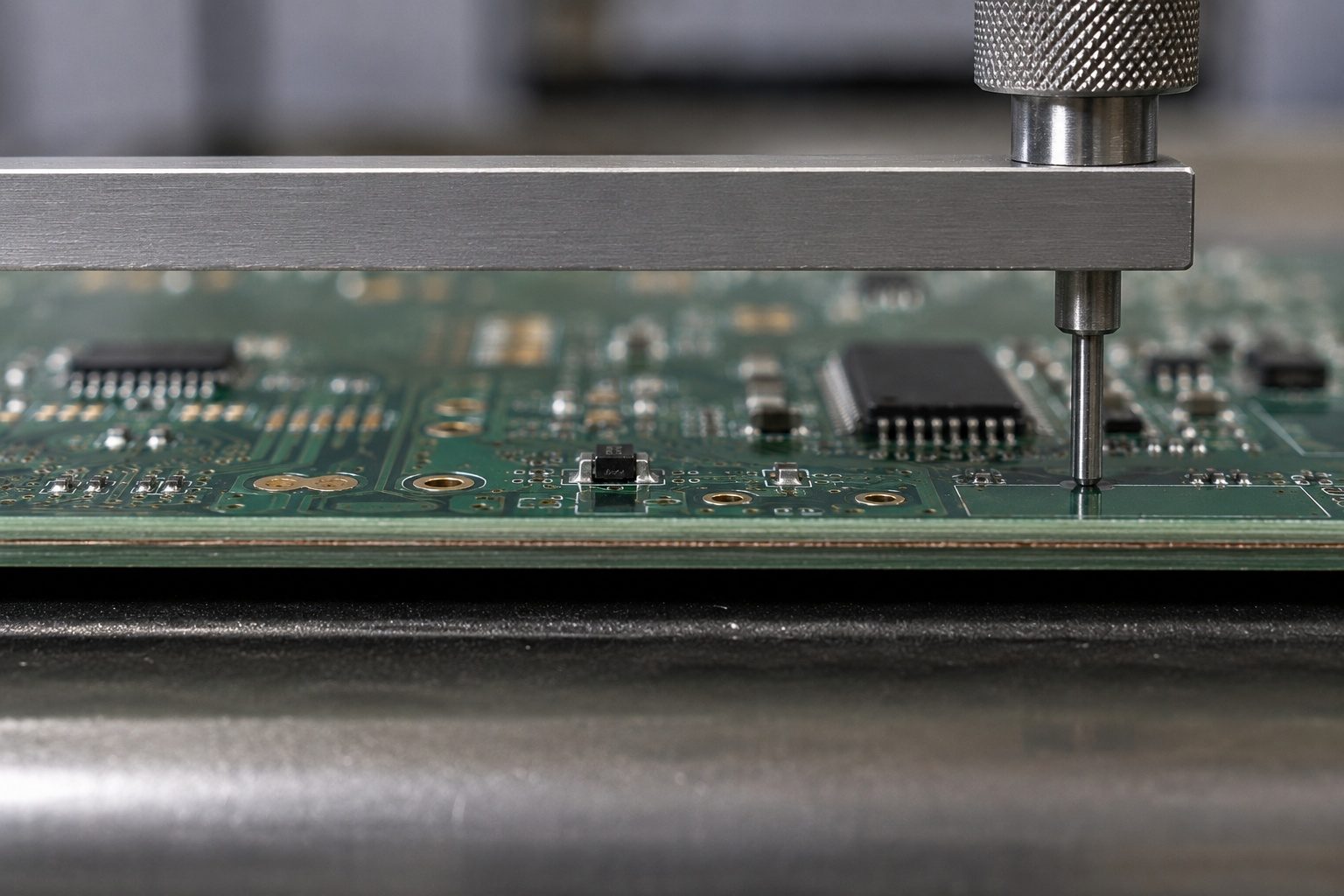
ENIG is typically preferred for fine-pitch components because its flat surface improves solder joint consistency and assembly accuracy.
Miniaturisation continues to drive increased component density across many electronics sectors.
As pad sizes shrink and component spacing reduces, assembly tolerances become increasingly demanding.
Fine-pitch devices commonly include:
- Ball Grid Arrays (BGAs)
- Quad Flat No-leads (QFNs)
- Chip-scale packages
- High-pin-count integrated circuits
- Advanced communication modules
These components require highly controlled solder joint formation.
Surface irregularities can increase the likelihood of:
- Bridging
- Incomplete solder joints
- Alignment issues
- Inspection challenges
- Rework requirements
ENIG’s uniform finish supports automated assembly processes by providing consistent pad geometry across the board surface.
HASL remains suitable for many SMT applications. Challenges tend to emerge only when pitch dimensions become particularly tight or assembly complexity increases significantly.
For high-density designs, ENIG generally provides greater manufacturing confidence.
Ready to start your project?
Contact our technical team today to see how Altimex can streamline your electronics supply chain.
Contact UsLead-Free Compatibility
Both ENIG and lead-free HASL support RoHS-compliant manufacturing, though thermal processing requirements differ.
Environmental regulations have accelerated the adoption of lead-free manufacturing practices throughout the electronics sector.
ENIG naturally aligns with lead-free production because the finish itself contains no lead.
Lead-free HASL uses lead-free solder alloys during the hot air levelling process, enabling compliance with RoHS requirements and broader environmental standards.
When evaluating compatibility, manufacturers should consider:
- Assembly temperatures
- Material selection
- Process validation
- Product compliance requirements
- Supply chain consistency
Compliance is rarely determined by surface finish alone. PCB materials, solder alloys, assembly processes and component selection all contribute to the final outcome.
Consequently, finish selection should support broader manufacturing objectives rather than acting as the sole compliance consideration.
Thermal Stress
HASL processing exposes PCBs to higher thermal stress during manufacturing, which may affect certain board designs or materials.
The HASL process requires immersion in molten solder followed by hot air levelling. This exposes the PCB to elevated temperatures during manufacture.
Most boards tolerate this process without issue.
Certain designs, however, can be more sensitive to thermal exposure.
Examples include:
- Thin PCB constructions
- Complex multilayer boards
- High-density interconnect designs
- Specialist substrate materials
- Tight dimensional tolerance applications
Exposure to elevated temperatures can contribute to material expansion during processing. In some cases, this may increase the risk of slight board distortion or warping. Thermal exposure can also be a consideration when assessing the risk of PCB delamination.
ENIG avoids this particular challenge because the finish is applied through chemical deposition rather than molten solder processing.
The significance of thermal stress varies considerably between projects. Many products perform exceptionally well using HASL, while more demanding designs may benefit from the reduced thermal impact associated with ENIG.
Oxidation Resistance
ENIG offers stronger oxidation resistance because the gold layer protects the underlying nickel surface from environmental exposure.
Oxidation can affect solderability, storage stability and assembly consistency if surfaces degrade before manufacturing begins.
The immersion gold layer in ENIG acts as a protective barrier that preserves surface quality until soldering occurs.
This characteristic provides advantages where:
- Boards remain in storage for extended periods
- Production schedules are phased
- Logistics chains are complex
- Assembly dates are uncertain
HASL provides a degree of protection through its solder coating, though exposed solder surfaces remain more susceptible to oxidation over time.
The practical benefit of stronger oxidation resistance is not simply improved appearance. It helps preserve predictable manufacturing behaviour throughout the production cycle.
For projects involving delayed assembly or extended procurement timelines, oxidation resistance can contribute to smoother manufacturing outcomes.
Production Complexity
ENIG involves a more complex chemical deposition process than HASL, increasing manufacturing time and cost.
Cost differences between ENIG and HASL are largely driven by manufacturing complexity rather than material value alone.
ENIG requires:
- Multiple chemical processing stages
- Precise bath control
- Thickness management
- Additional inspection procedures
- Greater process oversight
HASL uses a comparatively straightforward finishing process based on solder coating and levelling.
The result is generally lower manufacturing cost and faster processing.
| Factor | ENIG | HASL |
| Manufacturing complexity | Higher | Lower |
| Process control requirements | Extensive | Moderate |
| Inspection demands | Greater | Lower |
| Surface consistency | Excellent | Good |
| Cost position | Higher | More economical |
The decision should not focus solely on initial manufacturing expenses.
Additional investment in ENIG may be justified where assembly precision, reliability requirements or component density create measurable value.
Conversely, many applications gain little benefit from increased finish complexity.
Application Suitability
The right PCB surface finish depends on the application’s reliability requirements, component density and manufacturing priorities.
No single finish suits every project.
The following guidance provides a useful starting point.
| Application Type | Typical Preference |
| Consumer electronics | HASL or ENIG depending on complexity |
| Industrial control systems | Frequently ENIG |
| High-density assemblies | ENIG |
| Cost-sensitive products | HASL |
| Prototype builds | HASL in many cases |
| Medical electronics | Application dependent, commonly ENIG |
| Fine-pitch SMT designs | ENIG |
HASL is frequently selected where:
- Budget is a significant consideration
- Component density is moderate
- Standard assembly tolerances are acceptable
- High-volume manufacturing is required
ENIG is commonly selected where:
- Fine-pitch devices are present
- Surface flatness is critical
- Extended storage may occur
- Reliability expectations are higher
- Assembly precision is prioritised
Application requirements should always drive specification decisions.
Long-Term Reliability
Long-term reliability depends on both surface finish choice and manufacturing quality, not surface finish alone.
Reliability discussions frequently become oversimplified.
Surface finish plays an important role, although it represents only one element within a broader manufacturing system.
Factors influencing reliability include:
- PCB design quality
- Material selection
- Assembly processes
- Environmental conditions
- Product handling
- Operational stresses
- Maintenance practices
ENIG can provide advantages in environments where corrosion resistance, oxidation protection and assembly precision are particularly important.
HASL continues to support reliable performance across countless commercial and industrial products worldwide.
The more useful question is not which finish is universally more reliable.
Instead, engineers should consider whether the selected finish aligns with the product’s operating conditions, assembly requirements and lifecycle expectations.
Manufacturing quality remains equally important regardless of finish selection.
Choosing Between ENIG and HASL
ENIG is typically preferred for high-density, high-reliability assemblies, while HASL remains a practical and cost-effective choice for many standard PCB applications.
When making a final decision, consider the following checklist.
Choose ENIG when:
- Fine-pitch components are present
- Surface flatness is critical
- Storage periods may be extended
- Assembly precision is a priority
- Product reliability requirements are demanding
Choose HASL when:
- Cost efficiency is important
- Assembly tolerances are less demanding
- Component density is moderate
- Production volumes are high
- Application requirements do not justify additional finish complexity
The most effective approach is aligning finish selection with the specific demands of the product rather than assuming one finish is inherently superior.
Manufacturing objectives, reliability expectations, assembly complexity and procurement priorities should all influence the final specification.
If you are evaluating PCB surface finishes for a specific application, Altimex can help assess the most suitable manufacturing and assembly approach. To discuss your requirements, contact us and speak with our team.