

Deciding how many printed circuit board assemblies to order is only one part of production planning. The stronger question is how much manufacturing commitment the product is ready to support at its current stage.
Demand matters, yet it sits alongside design maturity, component availability, testing requirements, documentation control and repeatability. A forecast can suggest 500 saleable units, while the manufacturing requirement may also need to cover engineering samples, validation boards, replacements and spare stock. Ordering too far ahead can expose the business to obsolete components, design changes or inventory that no longer matches demand.
Effective PCB production planning connects commercial expectations with manufacturing reality. It helps a business decide what to build now, what to keep flexible and what needs to be validated before the next increase in quantity.
What Is PCB Production Volume Planning?
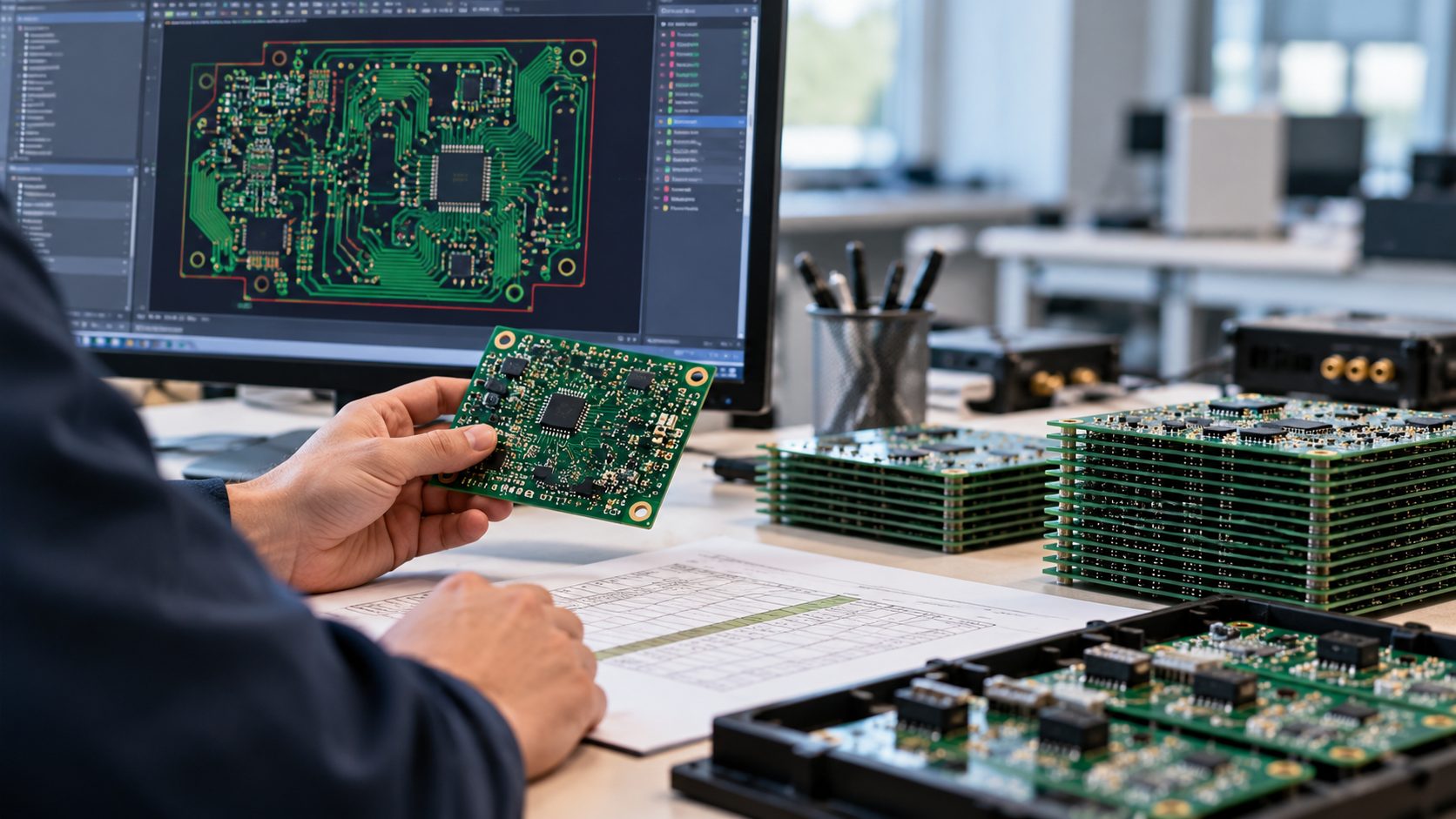
PCB production volume planning is the process of deciding how many assemblies will be required, when they will be required and whether the product, components and manufacturing process are ready to support those quantities.
The production quantity should not be treated as a copy of the sales forecast. A business expecting to ship 500 products may also need boards for engineering evaluation, field trials, replacements or service stock. It may decide not to manufacture the full requirement in one release if demand confidence remains limited.
A useful plan combines expected demand, validation needs, spare requirements, material availability and manufacturing readiness. The output is therefore more than a batch size. It is a staged view of what should be built, when commitments should be made and which risks need resolving first.
Scale Your Production
From prototype to full-scale electronic assembly, our UK facility is equipped to handle your requirements.
Get a QuoteWhy PCB Production Volume Planning Matters
Poor volume planning can create excess stock, component shortages, unnecessary setup costs or delays when demand changes faster than the manufacturing plan.
The consequences usually appear in four areas:
- Cash exposure: finished assemblies or components ordered too early tie up working capital.
- Design exposure: a late engineering revision can make existing materials or boards unsuitable.
- Supply risk: waiting too long to secure constrained parts can leave a viable design without materials.
- Scheduling pressure: sudden demand increases can be difficult to absorb if material availability and production capacity were not considered earlier.
Consider a product launch with uncertain uptake. One option is to manufacture the entire expected requirement immediately. Another is to place a smaller initial release, retain visibility of the wider forecast and review the next commitment after early demand and product performance become clearer.
Neither route is automatically correct. The decision depends on forecast confidence, component risk, design stability, lead times and the cost of holding stock compared with the risk of running short.
Understanding the Different Stages of PCB Production
PCB production should progress according to what has been validated, not simply because expected demand has increased.
| Production stage | Main objective | Typical uncertainty | Documentation maturity | Manufacturing priority |
| Prototype build | Prove design function | High | Developing | Learning and iteration |
| Pilot build | Test manufacturing readiness | Moderate | Becoming controlled | Validation and repeatability |
| Low volume production | Support controlled commercial demand | Moderate to reducing | Controlled | Flexibility and consistency |
| Higher volume production | Support greater demand | Lower | Mature | Process stability and supply continuity |
| Repeat manufacturing | Reproduce an approved build over time | Controlled | Revision-managed | Repeatability and change control |
Prototype Builds
Prototype builds are mainly about proving the design and learning from it. Engineering changes are expected, and the business may still be assessing component choices, layout decisions, test points or product integration.
The planning question is not how cheaply the board can be produced at scale. It is whether the build will provide enough evidence to support the next design decision.
Pilot Builds
Pilot production creates a bridge between proving the design and relying on it in repeat manufacture.
A pilot build can expose issues that a very small prototype quantity may miss, including assembly repeatability, component handling, inspection, test coverage or documentation gaps. Some units may also be allocated to customer trials, engineering evaluation or reliability work, which means the full batch should not automatically be treated as saleable stock.
Low Volume Production
Low volume production supports commercial supply while retaining room to respond to uncertain demand, product development or changing requirements.
The value lies in control rather than a universal quantity threshold. One product may stay at modest recurring quantities because its market is specialised. Another may use smaller releases temporarily while demand evidence improves.
High Volume Production
Higher volumes increase the importance of procurement planning, process stability, automation decisions, scheduling and cost control.
Board quantity alone does not determine the manufacturing approach. Component count, board complexity, package types and test requirements also influence how production should be organised.
Repeat Manufacturing
Repeat manufacturing is defined by control and reproducibility rather than size alone.
A board can be manufactured repeatedly at modest quantities if the design, bill of materials, manufacturing files, test requirements and revision status are controlled. A large one-off batch does not provide the same assurance.
Engineering-Led Solutions
Work with a team that understands modern electronics and end-to-end manufacturing.
Our ExpertiseHow to Estimate Your PCB Production Volumes
Start with expected demand, then adjust the requirement for validation units, spares, replacements, seasonality and forecast uncertainty.
A useful forecast gives direction. It should not be mistaken for a guaranteed order book.
1. Review Expected Product Demand
Separate confirmed requirements from anticipated demand.
Confirmed orders or scheduled internal requirements carry a different level of confidence from sales targets and market estimates. An internal forecast can distinguish firm demand, likely demand, upside demand and longer-range planning assumptions.
This gives the manufacturing discussion a range instead of false precision.
2. Account for Product Growth and Seasonality
Demand may follow a launch spike, seasonal peak, project cycle or irregular ordering pattern.
Production planning should reflect when units are needed, not only the expected annual total. A forecast split by period is usually more useful than one annual number with no timing information.
3. Include Replacement Boards and Spare Stock
Some products need a reserve for replacements, service requirements or field support.
Holding no spare stock can create problems if a replacement is needed after the main batch has been allocated. Holding too much creates excess inventory if the product changes. The right allowance depends on service expectations, component availability and how quickly another production run can be arranged.
What Information Is Needed to Create a PCB Production Plan?
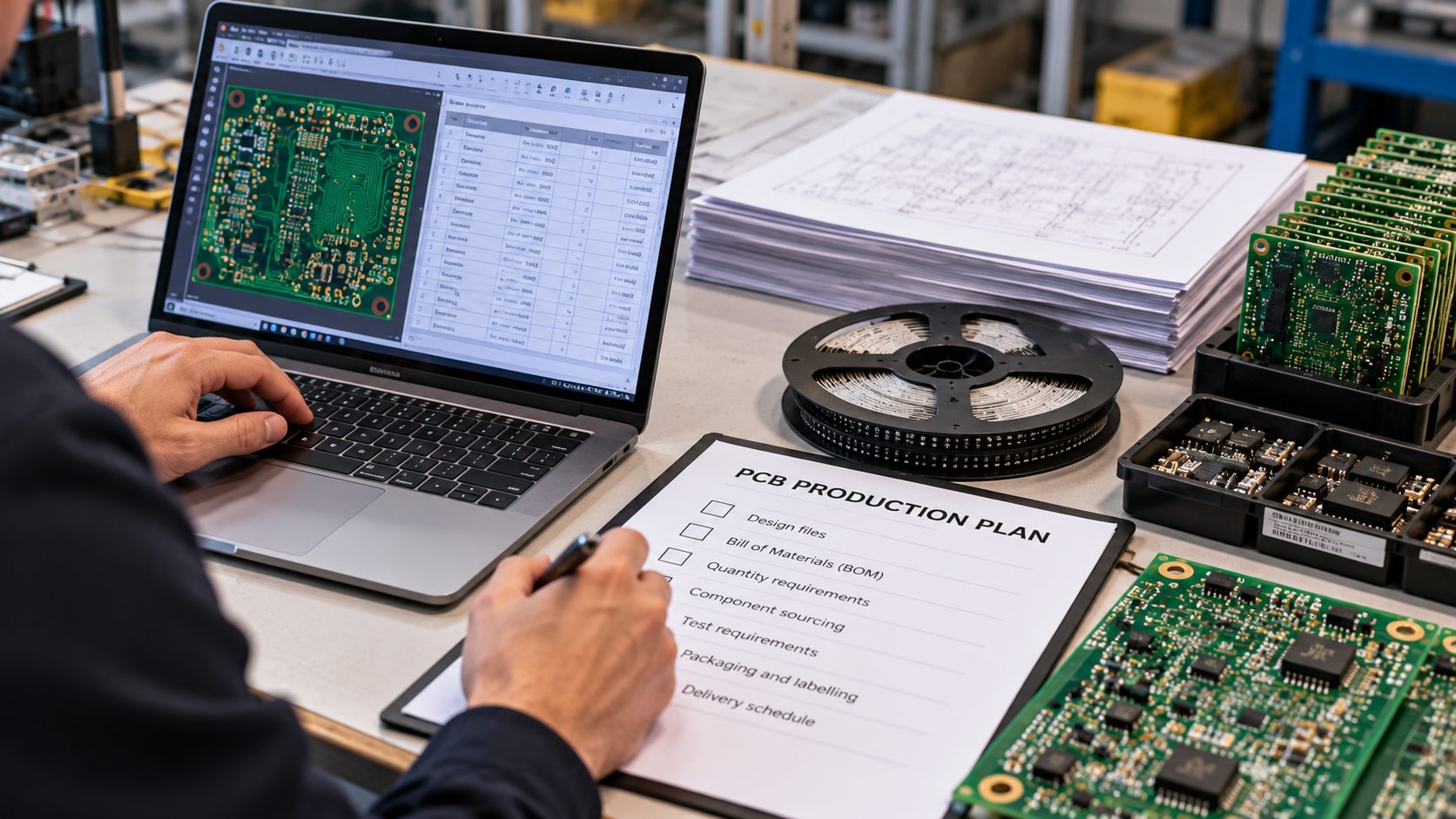
A useful production plan needs controlled manufacturing information alongside the volume forecast, including the bill of materials (BOM), design files, testing requirements and required delivery schedule.
Bill of Materials
The BOM should identify the required components, specifications and current revision.
Where suitable alternatives have already been technically approved, record them clearly. Revision control matters because an outdated BOM can create purchasing errors before assembly starts.
PCB Design and Manufacturing Files
Manufacturing information needs to be complete, current and consistent.
Depending on the project, assembly planning may involve fabrication data, pick-and-place information, assembly drawings and related production files. Readers needing broader process context can refer to Altimex’s guide to everything to know about the PCB assembly process.
Testing and Inspection Requirements
Testing expectations should be discussed before production planning is finalised where possible.
The manufacturer needs to understand what must be checked, what constitutes acceptance and whether the customer will provide any procedures, fixtures, software or test equipment.
Target Volumes and Delivery Schedules
State the total forecast and the quantities required at each delivery point.
A forecast of 2,000 assemblies over a year provides less planning value than a requirement showing 300 firm units followed by provisional releases linked to expected demand.
Ready to start your project?
Contact our technical team today to see how Altimex can streamline your electronics supply chain.
Contact UsHow Production Volume Affects the PCB Assembly Process
Increasing volume changes how manufacturers approach procurement, production setup, automation, testing and scheduling, even when the PCB design stays the same.
Component Procurement
A larger requirement can change the quantity of components purchased and the point at which commitments become necessary.
Securing more material may improve continuity for expected production, while increasing exposure if demand falls or the design changes. Component availability can also limit the schedule regardless of how quickly assembly itself can run.
Assembly Methods and Automation
Manufacturing methods depend on more than board quantity.
A complex board with a high component count creates different production requirements from a simpler assembly ordered in the same quantity. Package type, placement density, process steps and testing also influence the optimum setup.
Testing Procedures
Higher throughput does not remove the need for appropriate quality control.
Acceptance criteria, test coverage, traceability and failure handling should remain controlled as production becomes more repetitive. A volume increase without a suitable test plan only solves part of the manufacturing problem.
Production Lead Times
Lead time is shaped by material availability, preparation, scheduling, testing and delivery requirements.
A business requiring 1,000 boards across several staged deliveries presents a different planning problem from one requiring the same total quantity on a single date.
Planning the Transition from Prototype to Pilot Production
Move to a pilot build when the design is sufficiently stable to test not only whether the product works, but whether it can be manufactured repeatedly using the intended production process.
A working prototype proves an important point. It does not prove every point required for repeat manufacture.
Before moving into a pilot stage, review:
- whether major design changes are still expected
- whether component selections support continued supply
- whether manufacturing data is complete
- whether assembly issues found during prototyping have been addressed
- whether the test strategy reflects the intended product
- whether acceptance criteria are understood
Imagine a prototype that performs correctly while relying on a component with uncertain future availability. Technically, the design works. Commercially, committing to a larger build without addressing the supply risk creates a fragile production plan.
The pilot stage is where those two views need to come together.
When Is a PCB Ready for Repeat Manufacturing?
A PCB is ready for repeat manufacture when the design, documentation, test requirements and component strategy are sufficiently controlled for consistent future builds.
| Area | Ready signal | Warning sign |
| Design | Current revision has been validated | Major engineering changes remain likely |
| Documentation | BOM and manufacturing files are controlled | Teams hold different revisions |
| Testing | Acceptance and test requirements are defined | Test expectations remain unresolved |
| Components | Availability and lifecycle risks have been reviewed | Critical parts have no supply plan |
| Forecast | Firm and provisional quantities are separated | One forecast number is treated as certain |
| Change control | Engineering changes have an approval route | Changes can enter production informally |
The Design Has Been Fully Validated
Validation should reflect the product’s intended use and associated risks.
A board that passes a bench test may still require product-level validation, integration work or further assessment before repeat production is sensible.
Production Documentation Is Complete
Future builds need a controlled reference point.
The BOM, manufacturing data and assembly information should correspond to the approved revision. If an engineering change is introduced, the business needs to know which orders and materials are affected.
Testing Requirements Have Been Confirmed
Repeatability depends on having a consistent definition of an acceptable assembly.
Testing requirements, inspection expectations and failure handling should not need to be rediscovered each time the board is reordered.
Component Availability Has Been Assessed
A production-ready design also needs a credible component strategy.
Review lifecycle status, supply risk, lead times and approved alternatives where relevant. A board can be electrically mature while remaining difficult to manufacture consistently because one key part is becoming unavailable.
Moving from Low Volume to High Volume PCB Production
Increasing PCB production should follow demonstrated demand and manufacturing stability rather than an arbitrary quantity threshold.
Before committing to a materially larger programme, ask:
- Is demand sufficiently evidenced? Forecast growth matters, while purchase commitments should reflect confidence in it.
- Is the design stable? Larger material commitments increase the cost of late engineering changes.
- Can the supply chain support the requirement? Component availability may become the limiting factor before assembly capacity does.
- Is the manufacturing process repeatable? Documentation, testing and change control need to support consistent output.
A larger order is therefore a change in risk exposure as well as purchasing volume.
How PCB Production Volumes Affect Manufacturing Costs
Higher quantities can change unit economics, but PCB assembly cost does not fall according to a fixed volume formula because components, setup, testing, labour and logistics behave differently.
Component Purchasing and Volume Pricing
Larger component quantities can change supplier pricing or purchasing conditions.
The benefit depends on the parts involved, price breaks, minimum order quantities, market conditions and whether the extra material will be used. A lower part price has little value if a later design revision makes the stock unsuitable.
Tooling and Production Setup Costs
Some activities are associated with preparing the job rather than the number of finished boards.
When more assemblies are made in one run, fixed or semi-fixed setup activities may be spread across more units. This does not mean every cost element falls at the same rate.
Testing and Quality Assurance Costs
Testing is part of the manufacturing requirement rather than an overhead to remove without analysis.
The question is whether the test approach remains suitable as output changes. Increased throughput can require better-defined procedures, fixtures or data handling, depending on the product.
Packaging, Storage and Delivery Costs
A single larger batch may reduce production setup or delivery frequency, while increasing storage requirements and working capital exposure.
Staged production or delivery may cost more in some areas while giving the customer greater control over inventory and design risk.
Readers comparing live manufacturing options can review Altimex’s PCB assembly service.
Planning Component Procurement for Different Production Volumes
Component procurement should be planned alongside production volume because availability, minimum order quantities, lead times and lifecycle risk can constrain what can be manufactured.
| Risk | Production consequence | Planning response |
| Minimum order quantity exceeds current need | Excess component stock | Compare material exposure with likely future use |
| Long component lead time | Production cannot start when required | Identify constrained parts early |
| Component approaches end of life | Future repeat builds become uncertain | Review replacement strategy |
| No approved alternative | One shortage can stop production | Assess substitutes where technically appropriate |
Managing Minimum Order Quantities
Some parts may need to be purchased in quantities greater than the immediate build requires.
Before accepting the excess, consider whether future demand is credible, whether the design is stable and whether the component can be used in later production.
Monitoring Component Lead Times
A low-cost component can still determine the production date if its lead time is much longer than the rest of the BOM.
This is why sourcing reviews should focus on risk rather than component value. One inexpensive item can delay a board containing hundreds of readily available parts.
Planning for Component Obsolescence
If a specified part becomes obsolete, the effect can extend beyond procurement.
An alternative may need engineering assessment, validation or a design change before approval. Reviewing lifecycle risk early gives the business more options than discovering it when the next order is due.
Approving Alternative Components
Approved alternatives can increase flexibility where substitutions are technically suitable.
They should be assessed and documented through the appropriate engineering process. The aim is controlled choice, not informal substitution during purchasing.
Managing Quality as PCB Production Volumes Increase
Quality needs to remain controlled as output increases, but inspection, testing and process controls may be organised differently as manufacturing becomes more repetitive.
Keep the following controlled:
- product revision
- manufacturing data
- inspection requirements
- testing
- traceability where required
- handling of non-conforming assemblies
- engineering changes
Greater volume magnifies the effect of an uncontrolled issue. A documentation error affecting one prototype is inconvenient. The same error entering a large repeat run can create a wider material and scheduling problem.
Common PCB Production Volume Planning Challenges
Most production planning problems come from uncertainty changing faster than the plan, whether that involves demand, design revisions, component supply or forecasts.
| Challenge | Likely consequence | Practical mitigation |
| Demand is overestimated | Excess stock and tied-up capital | Separate forecasts from firm releases |
| Demand is underestimated | Shortages and urgent production pressure | Share likely upside demand early |
| Design changes after purchasing | Unusable or reworkable material | Control revisions before larger commitments |
| Critical component shortage | Delayed production | Identify supply risks and alternatives early |
| Forecast changes repeatedly | Poor scheduling visibility | Use rolling updates with review points |
Overestimating or Underestimating Demand
Overestimating demand can leave a business holding assemblies or components that no longer match commercial needs. Underestimating it may create a requirement faster than materials can be secured or production scheduled.
A strong plan does not try to eliminate forecast error. It identifies which decisions can remain flexible if the forecast changes.
Making Design Changes During Production
An engineering change can affect component requirements, existing material, work in progress, test procedures and future stock.
Production planning should therefore make revision ownership explicit. Everyone involved needs to know which revision applies to each order and how an approved change reaches manufacturing.
Dealing with Component Shortages
The right response depends on the affected component.
Some alternatives may be straightforward to assess. Others can influence electrical behaviour, regulatory requirements, mechanical fit or product validation. Production planning should identify supply risk early without assuming every shortage has an interchangeable substitute.
Managing Inconsistent Production Forecasts
Forecasts evolve as sales, customers and projects change. The problem is failing to communicate those changes until manufacturing decisions have already been made.
A rolling forecast can give the manufacturer visibility of likely requirements while preserving a distinction between planned and committed quantities. Defined review points also allow the business to reconsider inventory, component risk and delivery timing.
How to Build Flexibility into a PCB Production Plan
A flexible PCB production plan separates forecasts from firm commitments and gives both customer and manufacturer visibility of likely future demand.
Useful approaches include:
- divide likely demand into firm, provisional and longer-range quantities
- use staged releases where the commercial arrangement supports them
- review stock before each new commitment
- identify constrained components early
- approve suitable alternatives through the correct engineering route
- define review points for forecast changes
- keep revision status visible
Flexibility is not the same as avoiding decisions. It means committing when there is enough evidence to justify the commitment.
A business may secure selected long-lead components while leaving later production quantities provisional. Another may prefer smaller completed batches because design evolution remains possible. The right balance depends on the cost of uncertainty on both sides.
How a PCB Assembly Partner Supports Production Planning
A PCB assembly partner can help identify manufacturing, sourcing, testing and scheduling constraints before they disrupt planned production.
The most useful conversation goes beyond asking for a price at one quantity. A customer should be ready to discuss:
- current design revision
- BOM status and component risks
- firm and forecast demand
- intended delivery pattern
- testing and inspection requirements
- likely engineering changes
- repeat-order expectations
This allows the requirement to be considered as a production programme rather than an isolated batch.
For a business moving from development into repeat supply, the discussion can also expose gaps between what engineering considers complete and what manufacturing needs to reproduce the board consistently.
Questions to Ask Before Agreeing a PCB Production Schedule
Before committing to production, confirm what is being built, which revision applies, when materials are required and available, how the assemblies will be tested and when each quantity is needed.
Use these questions in a supplier meeting:
- Is the design frozen for this build?
- Is the BOM current and revision controlled?
- Do the manufacturing files match the approved revision?
- Are any components difficult to source?
- Have acceptable alternatives been approved where appropriate?
- Which quantities are firm and which remain forecast?
- Are all assemblies required together, or can deliveries be staged?
- What inspection and testing requirements apply?
- How will engineering changes be approved and communicated?
- What happens to existing materials if the design changes?
- Which units are intended for customer shipment, validation, engineering or spare stock?
- When should the production plan be reviewed again?
If several questions do not yet have clear answers, increasing the manufacturing commitment may be premature.
Create a PCB Production Plan That Supports Long-Term Growth
The strongest production plan does not simply maximise quantities. It matches manufacturing commitments to product maturity, demand confidence and supply chain reality.
Start with expected demand, then account for validation, engineering, spares and timing. Review whether the design and documentation are stable enough for the proposed quantity. Check whether component availability supports the schedule. Separate firm requirements from forecasts, then revisit the plan as commercial evidence improves.
The key decision at each stage is not “How many boards could we order?” It is “What level of commitment does the evidence justify now?”
Planning a pilot build or preparing an established PCB for repeat production? Contact us to discuss your PCB assembly requirements and the production information needed for your next build.